Hwy 10, West of Mandan

Hwy 10, West of Mandan

Sunday, September 15, 2013

Munger Bungo 600k – Ride Report


The Munger Bungo 600k brevet is a north-south route from Stillwater to Two Harbors along Minnesota’s eastern border.  The ride passes through Hinckley and Duluth using the 70 mile Willard Munger Trail.  As a result, a significant portion of the brevet uses a safe – and mostly paved – multiuse trail.  The brevet also has limited elevation gain over the approximate 380 mile route.  These attributes made the Munger Bungo the perfect brevet for a randonneur attempting his first 600k!

And so I lined up with 22 other riders at 6 a.m. in front of the Stillwater, MN Super 8 on September 7th for what was to be a near-36 hour ride.  What an experience it was to be!

In lieu of a chronological report, I’m opting to review a few key themes that emerged in my mind after some reflection.

Preparation

This was my first brevet of the year.  Further yet, it was my first ride of the year beyond 100 miles.  As one might expect, I was riddled with self-doubt about my fitness going into the ride.  This turned out to be a non-issue, as I was able to ride well for all but the final 60 miles (more on that below).  My pre-brevet strategy of incorporating brisk 100 km rides every week beginning in late June seemed to work.  These rides (typically starting at 3 or 4 a.m.) also allowed me to acclimate to night riding, which turned out to be important during critical sections of the Munger Bungo.

Being mentally prepared for the ride and highly organized with my gear was as important (and perhaps more important) than my fitness.  As Louis Pasteur once said, “Chance favors the prepared mind.”  Accordingly, I made every effort to anticipate what I might encounter along the route in order to develop a strategy.  Leading up to the Munger Bungo I took ample time to review the route and available facilities at each control.  I developed a strategy to ride quickly early in order to provide ample buffer for the second day, when I knew I would suffer most.  As time for the ride got closer, I reviewed (and re-reviewed) weather forecasts and carefully read the pre-ride report from Michelle Brougher.  Collectively, this information was golden, as there were few surprises.  I was even able to adhere to my pre-ride strategy, albeit at a slightly slower pace than expected due to a persistent headwind the first day.

As for gear, I organized clothes in my drop bag for specific purposes (e.g., Two Harbors out-and-back; Sleeping clothes; Second day gear), each in separate (and clearly labeled) freezer bags.  This organization helped me transition quickly at the Munger Inn.  As for what I carried on my bike, redundancy was key (e.g., two front lights, two tail lights, two tubes, two bottles of Ensure, multiple gels, etc).  I only felt unprepared once toward the end of the second day, when I wished for my fenders (I removed them prior to the ride as the chance for rain was negligible).

Managing Pain and Fatigue

Having a shoulder still in recovery mode from a torn labrum (see first blog post), coupled with a touchy right knee (previously torn ligaments) had me concerned how my body would respond to 600k.  As it turned out, my right shoulder was the least of my worries, but my upper back, neck and (eventually) right knee were problematic as the ride wore on.  To mitigate inflammation I took one Advil at each control, but this proved ineffective in the last 60 miles.  I included a tennis ball in my front bag and used it to massage my upper back by leaning against a wall (typically at a convenience store), and though it provided relief, I didn’t stick with it during the second day.  In retrospect, I should have stopped periodically to stretch and use the tennis ball more frequently.  Furthermore, I wonder if I would have benefited (in body and mind) from periodic mini-sleep stops.  As it turned out, I wasn’t able to fall asleep at the overnight control, resulting in some fairly significant fatigue later into the ride.  We took a mini-sleep stop along the Munger Trail on the morning of the second day, and even five minutes of shut-eye proved restorative.  In future brevets, I’ll definitely be on the look-out for shaded park benches to take advantage of this opportunity!

Being Chased by a Pack of Dogs is a More Effective Stimulant than Coffee

Enough said.

Riding Partners

I was blessed with two riding partners during the Munger Bungo: Phil and Randy.  Phil and I began riding together shortly after Taylor Falls, while Randy joined us just as we started on the Munger Trail north of Hinckley.  These guys were perfect riding partners.  Congenial, communicative, and mindful, we passed mile after mile with ease.  We rode at a similar speed, worked well in a paceline (0.5 mile/rider at the front), and fell easily into consensus on major decisions.  With the three of us working together, we also were able to quickly catch route errors during the second day (errors, as it turned out, I contributed to).  At the finish, I couldn’t thank them enough for their help and encouragement over the course of the ride.  I hope to ride with them again.

And speaking of gratitude…

Giving Thanks

I owe a big ‘THANK YOU’ to the following people for their contributions toward making my first 600k a success:
  • Michelle Brougher for organizing an excellent route, recruiting top-notch help, commandeering an amazing overnight control (including almond milk for breakfast!), and providing much-needed encouragement and advice before and after Two Harbors.  And let it be known that the Espresso gel Michelle gave me made all the difference after North Branch!
  • Rob Welsh for his communication prior, encouragement during, and congratulations after the Munger Bungo.  The Minnesota Randonneurs are fortunate to have Rob as their RBA!
  • Dr. Ian Fyfe, Tana Ciavarella, and Mike Ibach for putting my shoulder back together and guiding me toward a full recovery.
  • Epic Sports for their support of my riding this year.
  • My wife for putting up with my crazy training schedule from June onward, and for being at the finish when we arrived.

And Now for Some Photos!

(Pre-ride review)


(Riding together prior to Taylor Falls)


(Taylor Falls without the much anticipated donuts)


(Onto the Munger Trail)


(Headwind)


(St. Louis River just outside Carlton)


(Along the Lakewalk Trail in Duluth)


(Darkness falls en route to Two Harbors)


(Back on the Munger Trail)


(At the finish with Phil and Randy.  We made it!)

Monday, August 19, 2013

Breckenridge Colorado: An Ideal High Altitude Cycling Destination

Breckenridge offers wonderful cycling opportunities for both road and mountain bikers.  Located about 10 miles south of Frisco, CO, Breckenridge boasts hundreds of miles of single/double track, multiple road ride options, and an extensive network of paved trails.  While such riding options are certainly available in other U.S. communities, only Breckenridge can offer them at an elevation of 9,600 ft (2,926 m).

Fortunately for me, we vacationed in Breckenridge earlier this month.  Our stay overlapped with ‘Breck Bike Week’ as well as ‘Breck Epic’, so there were plenty of cycling-related events going on throughout town concurrent to our stay.

I had four days of riding opportunities, which I took full advantage.  An ascent of Hoosier Pass was my first order of business, followed by rides to Vail Pass, Keystone (around Lake Dillon), and Frisco.


I was even able to ride to the Eifel Tower!


Having previously vacationed in Breckenridge in 2005, I was struck by the intensification of automobile traffic and expansion of multi-use paved trails.  Being able to cycle around Lake Dillon without having to negotiate traffic came as a pleasant surprise.  Furthermore, all paved trails were in excellent shape despite the apparent heavy use by cyclists.
I hope eight more years don’t go by before I can visit again!

Thursday, July 4, 2013

Reframing the Bicyclist-Motorist Relationship


Jan Heine has provided a thoughtful ‘reframing’ of the bicyclist-motorist relationship.  The link to his highly recommended article can be found here.

In short, we should treat each other as partners, not competitors.  Enjoy!

Sunday, June 30, 2013

Theodore Roosevelt National Park


Theodore Roosevelt National Park is a great place to ride.  The challenging terrain, reasonable riding distance, and surrounding beauty provide an excellent one-day getaway from the local roads of Bismarck/Mandan.  While riding anytime between April and November is possible, I prefer to visit the park in early June when much of the surrounding vegetation is green and the wildlife is active.

The park exists as two units: north and south.  The north unit, located approximately 50 miles north of Belfield, ND, has a 14 mile out-and-back road that terminates at the Oxbow Overlook.


(Oxbow Overlook)

The south unit is immediately north of Medora, ND.  This unit showcases a 36 mile loop perfect for bicyclists.  Despite the lack of a shoulder along the loop road, automobile traffic is normally light and almost always travelling less than 30 mph.  The terrain is surprisingly hilly (for North Dakota), with many short, steep climbs.  It is an ideal ride to test the legs after logging a spring time of base miles.


(Looking south from Boicourt Overlook)

The Central Dakota Cyclists have organized a group ride the last three years through the south unit during the third Saturday in June.  Bicyclists of all backgrounds and abilities have attended, and all – with the exception of one cyclist this year – have been able to ride the 36 mile loop at least once.


(Riders take a break while a storm builds to the west)
(A family event...   ...and a great workout as well!)
(Riding toward Wind Canyon)


Monday, May 6, 2013

Developing New Skills: A Visit to Barnett Bicycle Institute


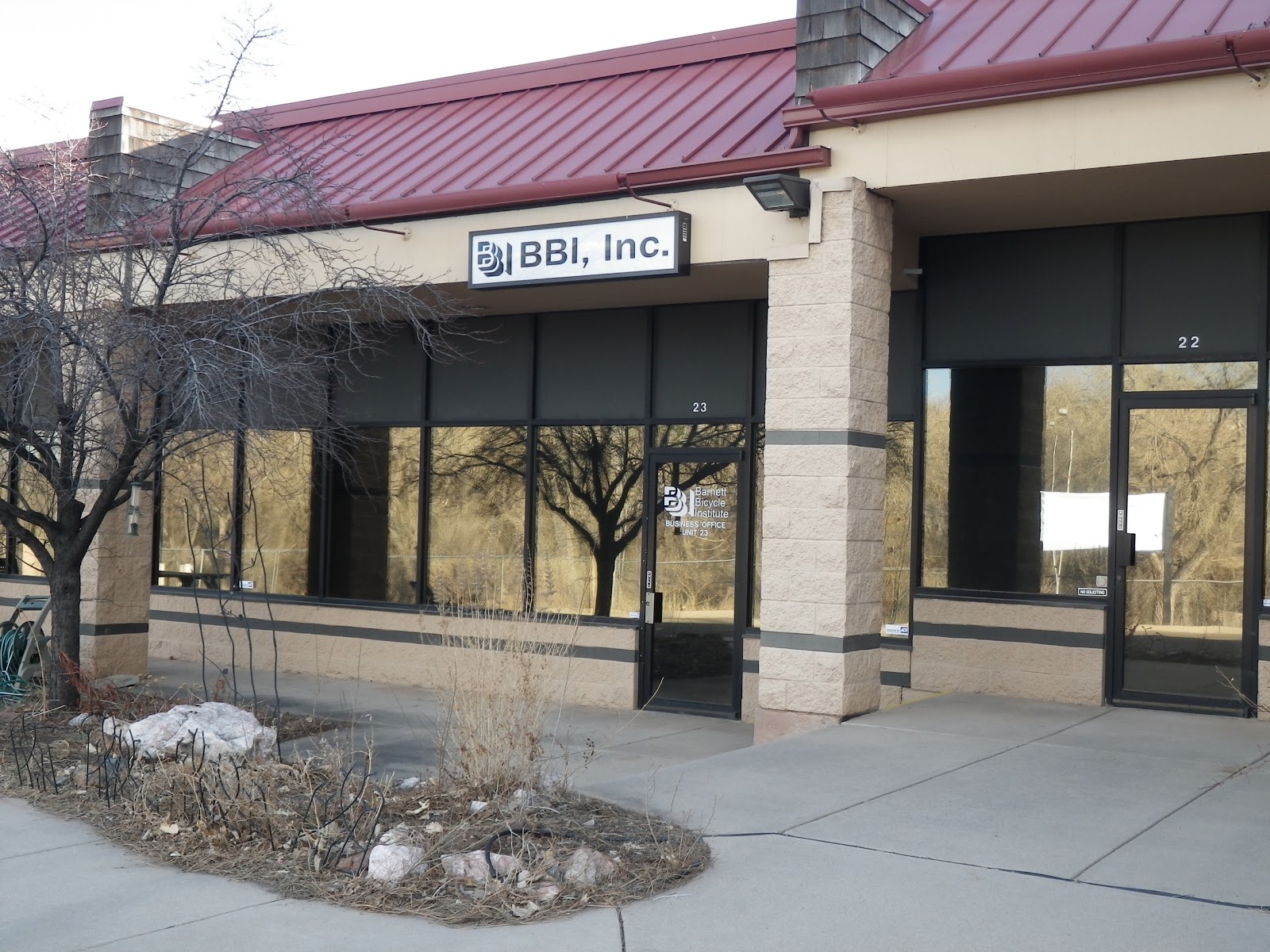
Following more than a year of rescheduling and delays, I finally attended a bicycle mechanic course at Barnett Bicycle Institute (BBI) in Colorado Springs early last month.  I participated in the beginning 40 hour course called BAM (Bicycle Assembly & Maintenance), which was suited to home mechanics like myself.  The course was excellent through-and-through, with plenty of hands-on experience under the watchful eyes of seasoned instructors.


In addition to acquiring basic maintenance skills, I also attended a night course on wheel building.  The course, taught by John Ellis, underscored the deliberate, step-by-step approach for lacing and truing wheels.  I found wheel building an enjoyable activity (relaxing, really).  As an added plus, I brought new rims and spokes along with Shimano 105 front and rear hubs from my Koga-Miyata and applied my new skills to build two wheels.


(Wheel components)
(Built wheel)
Not all time was spent attending the course or practicing new skills.  I was able to venture out twice on my bike, first to Red Rocks Canyon, and then later in the week to Garden of the Gods.  Both rides were enjoyable, and only minutes away from BBI.


Reflecting on my week at BBI will always bring good memories, as well as a lasting appreciation for what it takes to keep your bike’s performance at the highest level.  Thank you BBI!

Saturday, April 20, 2013

Nice Ride!

A recent visit to St. Paul brought a surprise with the presence of a new bicycle sharing program.  ‘Nice Ride Minnesota’ was established by the Twin Cities Bike Share Project in 2008, but only recently expanded throughout St. Paul.  The bikes and docking stations appeared to be in excellent shape during our visit, and despite the snow and cool weather, we passed two riders along Grant Street near Macalester College.  Had we more time, I would have taken a bike for a spin.  Rides less than 30 minutes are free (following a $6 subscription fee).

('Nice Ride' bikes and docking station along Grant Street)

Monday, March 4, 2013

First Ride - 2 March 2013

Unseasonably warm weather coupled with light winds made for the perfect opportunity to get out to stretch my legs and clear the winter dust from my underworked lungs.  Following a quick change in tires on the Surly Monkey (from Schwalbe Hurricanes to Maxxis Aspens), I headed out a little past noon in the direction of Fort Lincoln State Park.

It was nice to see most of the ice cleared from the the Missouri river.  Perhaps a sign that spring isn't too far away!


Upon reaching the park, winter's ice still had a strong hold on the Heart River.  The photograph below shows the confluence of the Heart and Missouri rivers.


Passing by the Veteran's Memorial and onto 46th St., I meandered south to 138A and then west past the Miniature Horse Rescue Ranch.  Based on the amount of traffic along the road, there must have been an afternoon sale.  Once past, the road was open and free of traffic.


With the intent of keeping the mileage modest, I turned north and followed 24th then 23rd Ave. past the USDA-ARS Area IV SCD Research Farm.  The 382 acres managed by staff at the Northern Great Plains Research Laboratory are partitioned among four quarter sections, referred to fields F, G, H, and I.


(Field H)


(Field F)


(Field G)

Approximately 40 miles later, I arrived home.  It was a good first ride, and all the more satisfying now that the ground is covered with a thick blanket of wet snow.