Hwy 10, West of Mandan

Hwy 10, West of Mandan

Thursday, July 4, 2013

Reframing the Bicyclist-Motorist Relationship


Jan Heine has provided a thoughtful ‘reframing’ of the bicyclist-motorist relationship.  The link to his highly recommended article can be found here.

In short, we should treat each other as partners, not competitors.  Enjoy!

Sunday, June 30, 2013

Theodore Roosevelt National Park


Theodore Roosevelt National Park is a great place to ride.  The challenging terrain, reasonable riding distance, and surrounding beauty provide an excellent one-day getaway from the local roads of Bismarck/Mandan.  While riding anytime between April and November is possible, I prefer to visit the park in early June when much of the surrounding vegetation is green and the wildlife is active.

The park exists as two units: north and south.  The north unit, located approximately 50 miles north of Belfield, ND, has a 14 mile out-and-back road that terminates at the Oxbow Overlook.


(Oxbow Overlook)

The south unit is immediately north of Medora, ND.  This unit showcases a 36 mile loop perfect for bicyclists.  Despite the lack of a shoulder along the loop road, automobile traffic is normally light and almost always travelling less than 30 mph.  The terrain is surprisingly hilly (for North Dakota), with many short, steep climbs.  It is an ideal ride to test the legs after logging a spring time of base miles.


(Looking south from Boicourt Overlook)

The Central Dakota Cyclists have organized a group ride the last three years through the south unit during the third Saturday in June.  Bicyclists of all backgrounds and abilities have attended, and all – with the exception of one cyclist this year – have been able to ride the 36 mile loop at least once.


(Riders take a break while a storm builds to the west)
(A family event...   ...and a great workout as well!)
(Riding toward Wind Canyon)


Monday, May 6, 2013

Developing New Skills: A Visit to Barnett Bicycle Institute


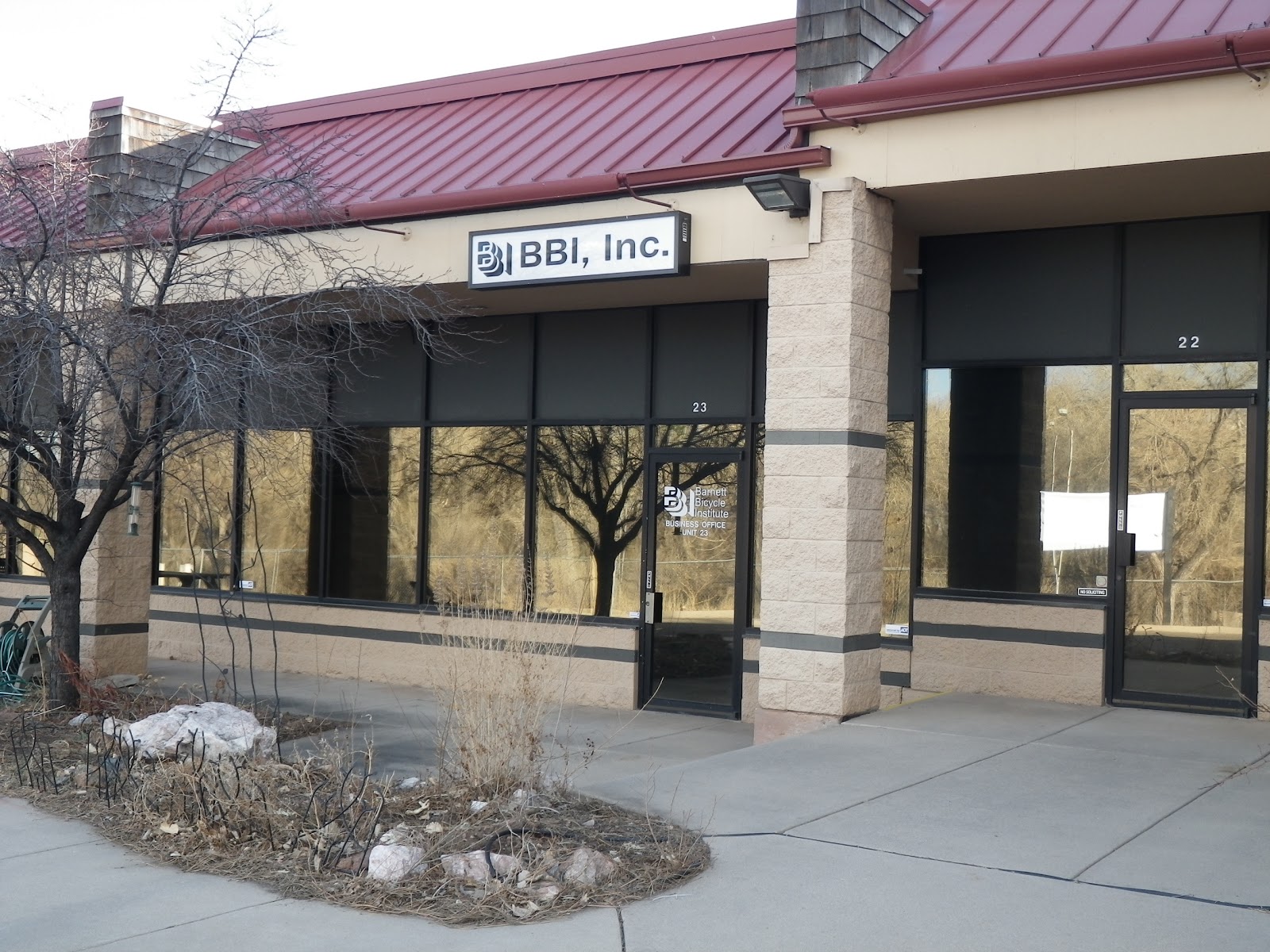
Following more than a year of rescheduling and delays, I finally attended a bicycle mechanic course at Barnett Bicycle Institute (BBI) in Colorado Springs early last month.  I participated in the beginning 40 hour course called BAM (Bicycle Assembly & Maintenance), which was suited to home mechanics like myself.  The course was excellent through-and-through, with plenty of hands-on experience under the watchful eyes of seasoned instructors.


In addition to acquiring basic maintenance skills, I also attended a night course on wheel building.  The course, taught by John Ellis, underscored the deliberate, step-by-step approach for lacing and truing wheels.  I found wheel building an enjoyable activity (relaxing, really).  As an added plus, I brought new rims and spokes along with Shimano 105 front and rear hubs from my Koga-Miyata and applied my new skills to build two wheels.


(Wheel components)
(Built wheel)
Not all time was spent attending the course or practicing new skills.  I was able to venture out twice on my bike, first to Red Rocks Canyon, and then later in the week to Garden of the Gods.  Both rides were enjoyable, and only minutes away from BBI.


Reflecting on my week at BBI will always bring good memories, as well as a lasting appreciation for what it takes to keep your bike’s performance at the highest level.  Thank you BBI!

Saturday, April 20, 2013

Nice Ride!

A recent visit to St. Paul brought a surprise with the presence of a new bicycle sharing program.  Nice Ride Minnesota’ was established by the Twin Cities Bike Share Project in 2008, but only recently expanded throughout St. Paul.  The bikes and docking stations appeared to be in excellent shape during our visit, and despite the snow and cool weather, we passed two riders along Grant Street near Macalester College.  Had we more time, I would have taken a bike for a spin.  Rides less than 30 minutes are free (following a $6 subscription fee).

('Nice Ride' bikes and docking station along Grant Street)

Monday, March 4, 2013

First Ride - 2 March 2013

Unseasonably warm weather coupled with light winds made for the perfect opportunity to get out to stretch my legs and clear the winter dust from my underworked lungs.  Following a quick change in tires on the Surly Monkey (from Schwalbe Hurricanes to Maxxis Aspens), I headed out a little past noon in the direction of Fort Lincoln State Park.

It was nice to see most of the ice cleared from the the Missouri river.  Perhaps a sign that spring isn't too far away!


Upon reaching the park, winter's ice still had a strong hold on the Heart River.  The photograph below shows the confluence of the Heart and Missouri rivers.


Passing by the Veteran's Memorial and onto 46th St., I meandered south to 138A and then west past the Miniature Horse Rescue Ranch.  Based on the amount of traffic along the road, there must have been an afternoon sale.  Once past, the road was open and free of traffic.


With the intent of keeping the mileage modest, I turned north and followed 24th then 23rd Ave. past the USDA-ARS Area IV SCD Research Farm.  The 382 acres managed by staff at the Northern Great Plains Research Laboratory are partitioned among four quarter sections, referred to fields F, G, H, and I.


(Field H)


(Field F)


(Field G)

Approximately 40 miles later, I arrived home.  It was a good first ride, and all the more satisfying now that the ground is covered with a thick blanket of wet snow.

Saturday, February 23, 2013

Bikes I Ride

The stable of bikes I own are a reflection of my different passions for cycling, and while they each have a defined purpose, I like to think they are adaptable to more than one riding style.  Thanks to over a decade of support by Epic Sports, I've been fortunate to acquire some truly excellent bikes at team prices, three of which have been built following unique guidelines for components and accessories.

Each bike reviewed below briefly describes the following: 1) frame, components, and accessories, 2) intended use, and 3) my most memorable riding experience.

Surly Cross Check (est. 2010)
  • The frame is as the title suggests, White Industry cranks and chainrings, Shimano Ultegra derailleurs (2x9) with downtube shifters, Chris King hubs and bottom bracket, Salsa seatpost, stem, skewers, and handlebar, Avid brakes, Tektro brake levers, Crank Brothers Eggbeater pedals, Nitto M-12 front rack, Velo-Orange hammered aluminum fenders, Brooks B17 saddle, Schwalbe Marathon tires (32 mm), Acorn randonneur bag and medium seatbag, and Japanese brass bell.  Credit goes to Mike Hilden for creating this wonderful bike.


  • This bike serves as my daily commuter.
  • Despite its commuter role, my most memorable ride with this bike was a 95 mile jaunt to and from Steele, ND on July 4th, 2011.  It was a calm, cool morning.  Enjoyed sunrise near Driscoll and a tailwind on the way home.

Surly Karate Monkey (est. 2009)
  • Another frame by Surly, SRAM X9 (2x9), Mavic Crossmax wheels (29"), Salsa seatpost, stem, and Woodchipper bars, Specialized Rival saddle, and Japanese brass bell.  The pedals have been swapped for Eggbeaters and the tires are now Schwalbe Hurricanes (41 mm).  This bike was originally built by Tyler Huber with a White Industry Double-Double drivetrain and flat handlebar.  The version photographed below was built by Steven Wilke.


  • While the most versatile bike of the bunch, it serves primarily as an early season trainer and a year-round gravel bike.
  • Burleigh County Cup, May 12th, 2012.

Specialized Epic 29 (est. 2011)
  • Full aluminum frame, FSR/Fox suspension (BRAIN in back, Float 29 in front), SRAM XO (2x10), Industry Nine wheels, Maxxis Crossmark tires (tubeless), Specialized stem, bar, and grips, Thomson seatpost, Specialized Rival saddle, and Eggbeater pedals.  This bike was built by Steven Wilke.


  • Singletrack.
  • Dakota 5-O, September 2nd, 2012.  Briefly led the second wave up the gravel road after the start.  The ride ended poorly (see previous post), but it was still the most memorable day on this bike.

Specialized Roubaix Pro (est. 2005)
  • Full carbon frame, Shimano Dura Ace (2x9), Specialized carbon seatpost and handlebar, Specialized aluminum stem, Specialized Avatar saddle, Ksyrium Equipe wheelset (in place of Dura Ace wheelset, which is used rarely), Ruffy Tuffy tires (28 mm), and Speedplay Zero pedals.


  • Road riding.  Short distance brevets (up to 300 km).
  • Gran Fondo, Fort Collins, CO, August 12, 2011.  Dropped all but one rider climbing Rist Canyon and then rode the remainder of the 90 mile route with the lead group.  Passed through some of my old stomping grounds west of Horsetooth reservoir.  It was a fun day.


Koga-Miyata Terraliner (est. 1998)
  • Terraliner frame, Shimano Ultegra (3x8), bar-end shifters, Sugino cranks and chainrings (gearing suitable for touring), Mavic MA40 rims and Ultegra hubs (36 spokes, front and rear), Panaracer Pacela tires (32 mm), Richey seatpost, Nitto stem and handlebar, Velo-Orange aluminum fenders, Brooks B17 saddle, Eggbeater pedals, Zefal frame pump, and Japanese brass bell.  This bike is being upgraded.  Stay tuned for significant improvements.


  • Touring.  Longer brevets.
  • Cowboy Trail, north central Nebraska, August 2000.  Rode from Atkinson to Platte Center while camping along the way.

Saturday, February 2, 2013

A Visit to The Big Apple

Travelling benefits us in so many ways, one of which is often a greater appreciation of your hometown.  A recent visit to the east coast provided an especially notable contrast between bike lanes/paths here in Bismarck/Mandan and those in New York City.  Over three very full days, I ventured forth with my wife and daughter to explore different parts the 'concrete jungle', otherwise known as Manhattan.  The intensity and speed of automobile traffic was mind-boggling at times, and made us happy to be on a bus or subway for most of our transportation needs.  While I was impressed with the network of bike lanes (which were painted green, but fading badly), their use by bicyclists was sporatic.  Here's what they look like...


Admittedly, we were visiting during a holiday weekend (MLKJ), which may have contributed to limited use.  Still, I wonder how much they're used on a normal weekday given what seemed to be exceptionally dangerous riding conditions, particularly at intersections.

Most bikers we saw during our trip rode within the confines of Central Park.  While they still had to dodge meandering tourists, runners, and an occasional horse-drawn cart, it seemed a much more relaxing experience.


I wonder how many of the bicyclists we encountered that weekend are able to 'escape' the city to ride on open roads, without the endless pressure of being surrounded by ten million people.  Conversely, I wonder how many bicyclists move to New York City from other parts of the world where open roads are the norm.  The transition must be difficult.  I know it would be for me.